AI Assisted · Asset Management · Maintenance Management · Spare Parts Management
Without a plan, maintenance is all firefighting — a machine stops, production halts, and the spare you need is nowhere to be found.
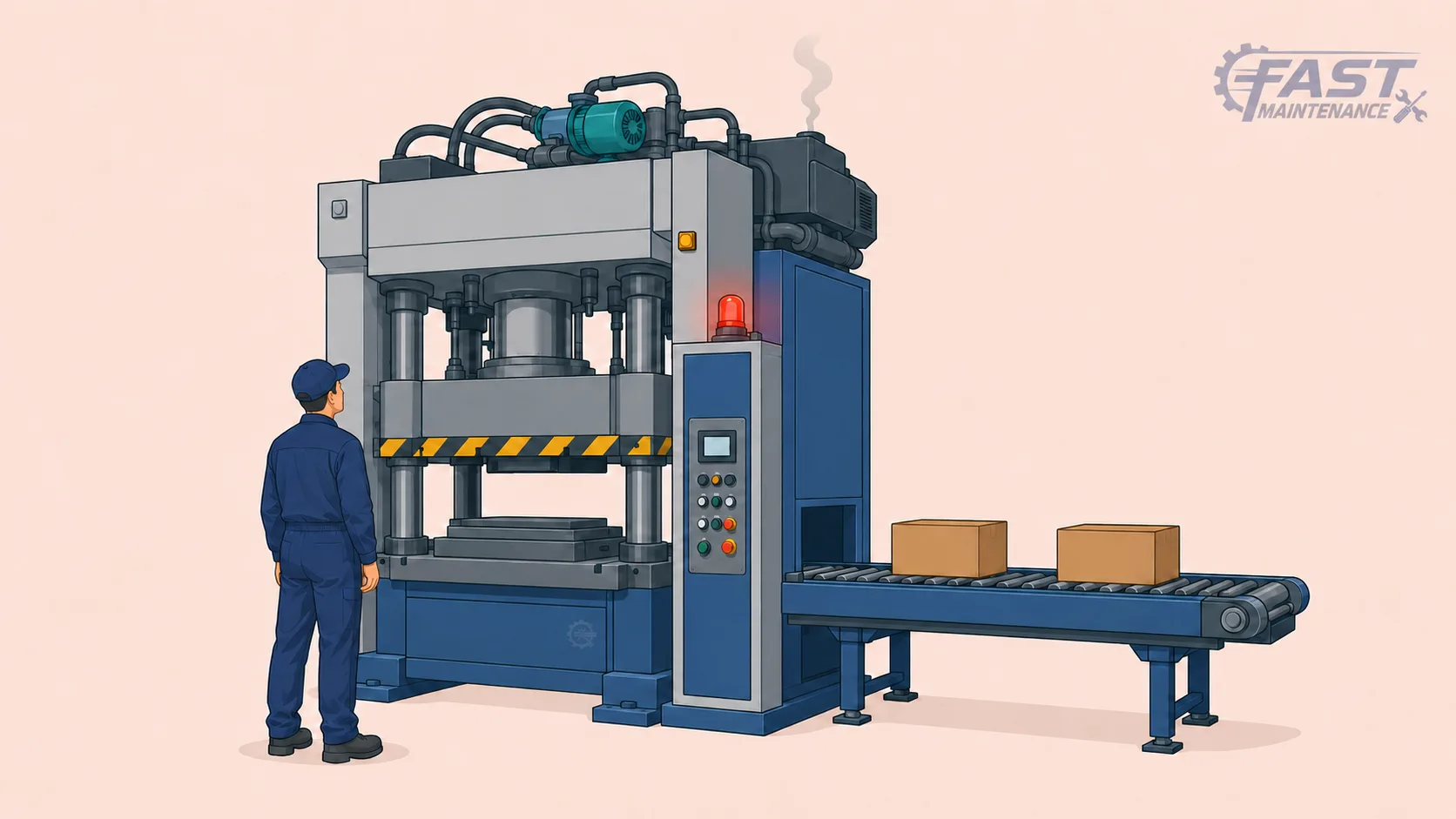
A machine fails mid-shift and everything stops. There was no warning because nothing was being tracked.
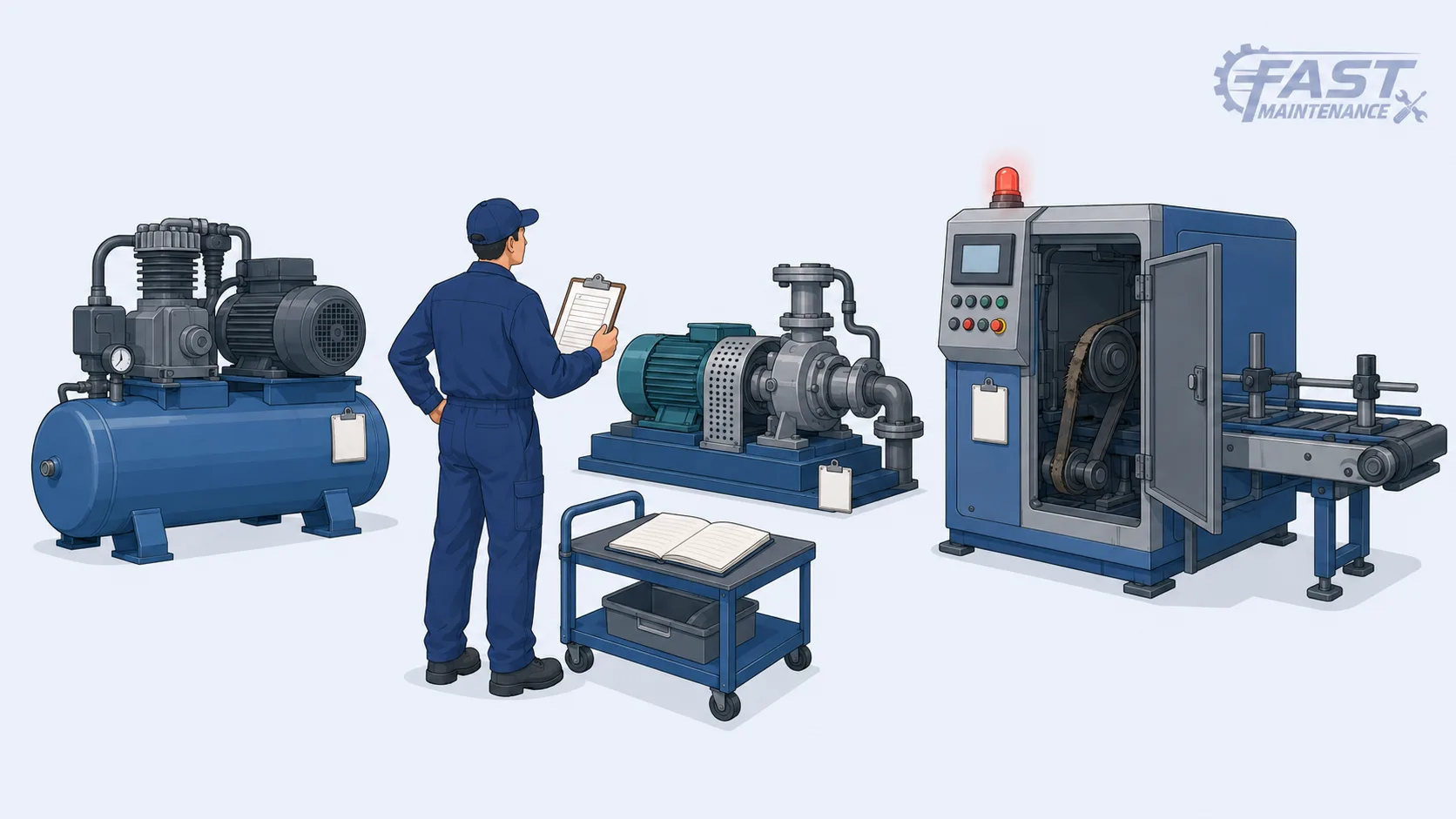
Nobody is sure which machines are due for a service, so problems are found only after something has already failed.
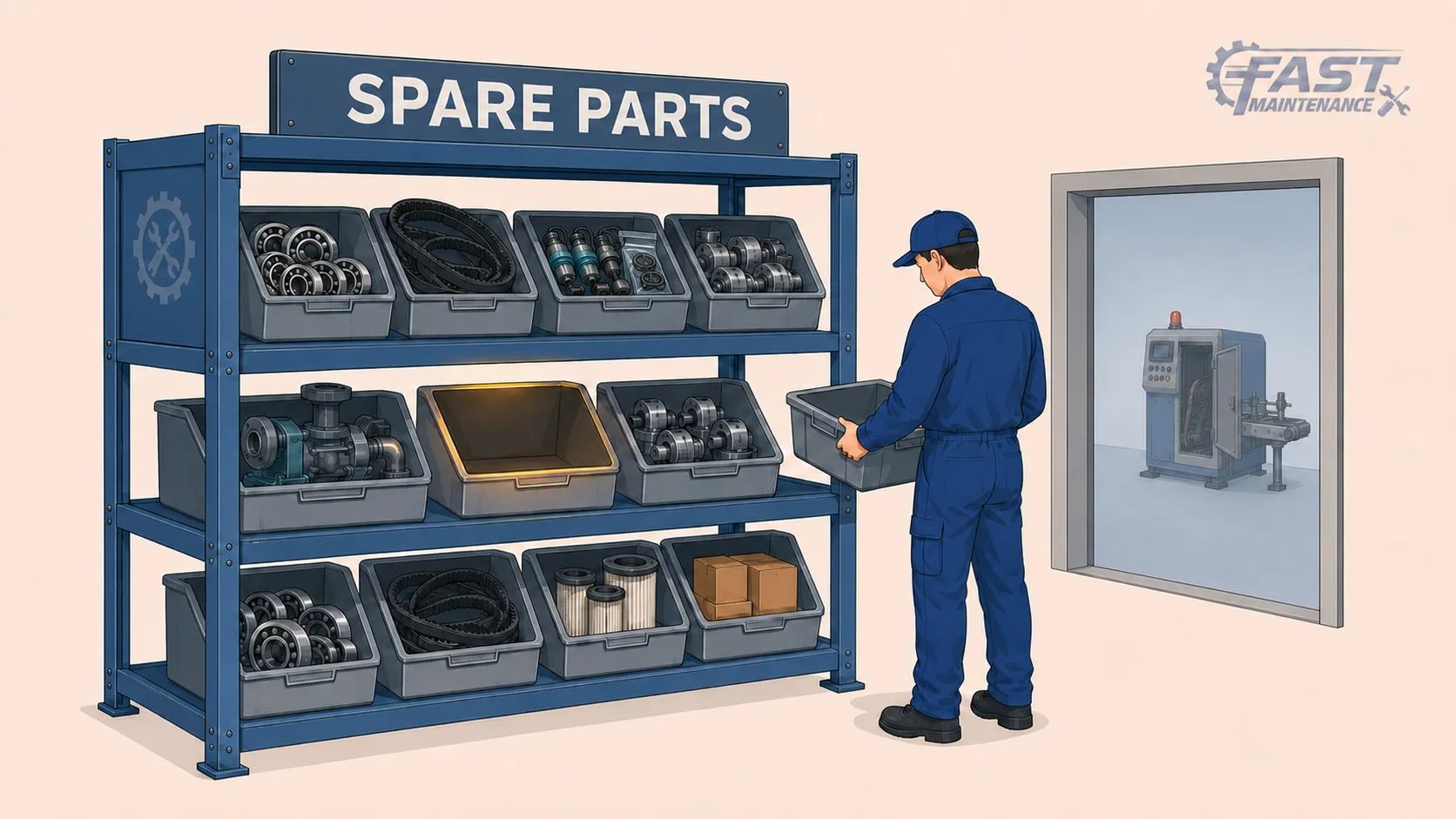
The one part you need is not in the store, and the machine now sits idle for days while you wait for it to arrive.
Fast Maintenance keeps a complete record of every asset, machine, utility its spare parts and its maintenance history in one place. It reminds your team to service machines on time, logs every breakdown and repair, and tracks the spares in your store. Prevent breakdowns instead of fixing them & reduce downtime.
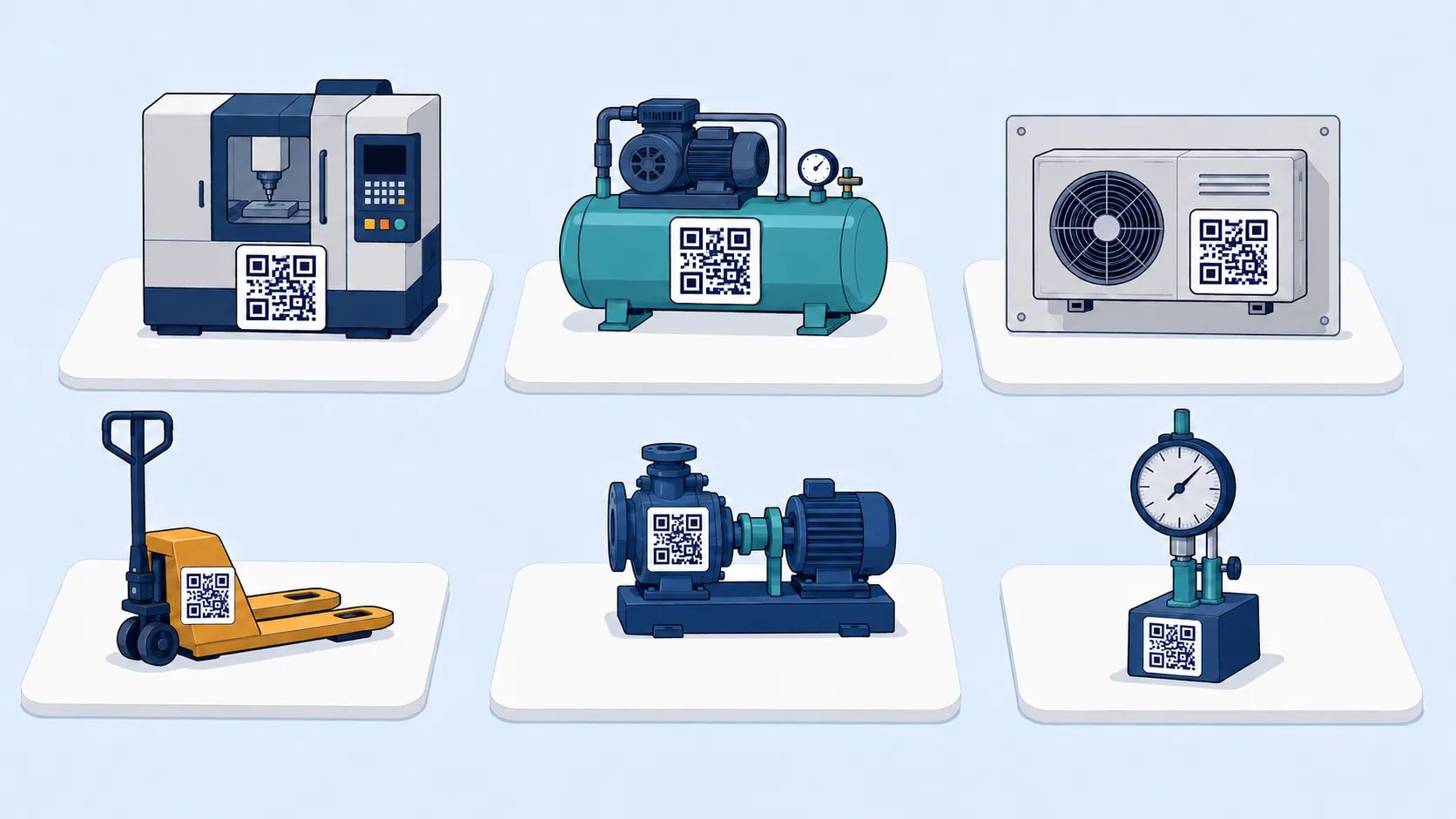
Keep one register of all your machines, with their spare parts and full maintenance history in a single place.
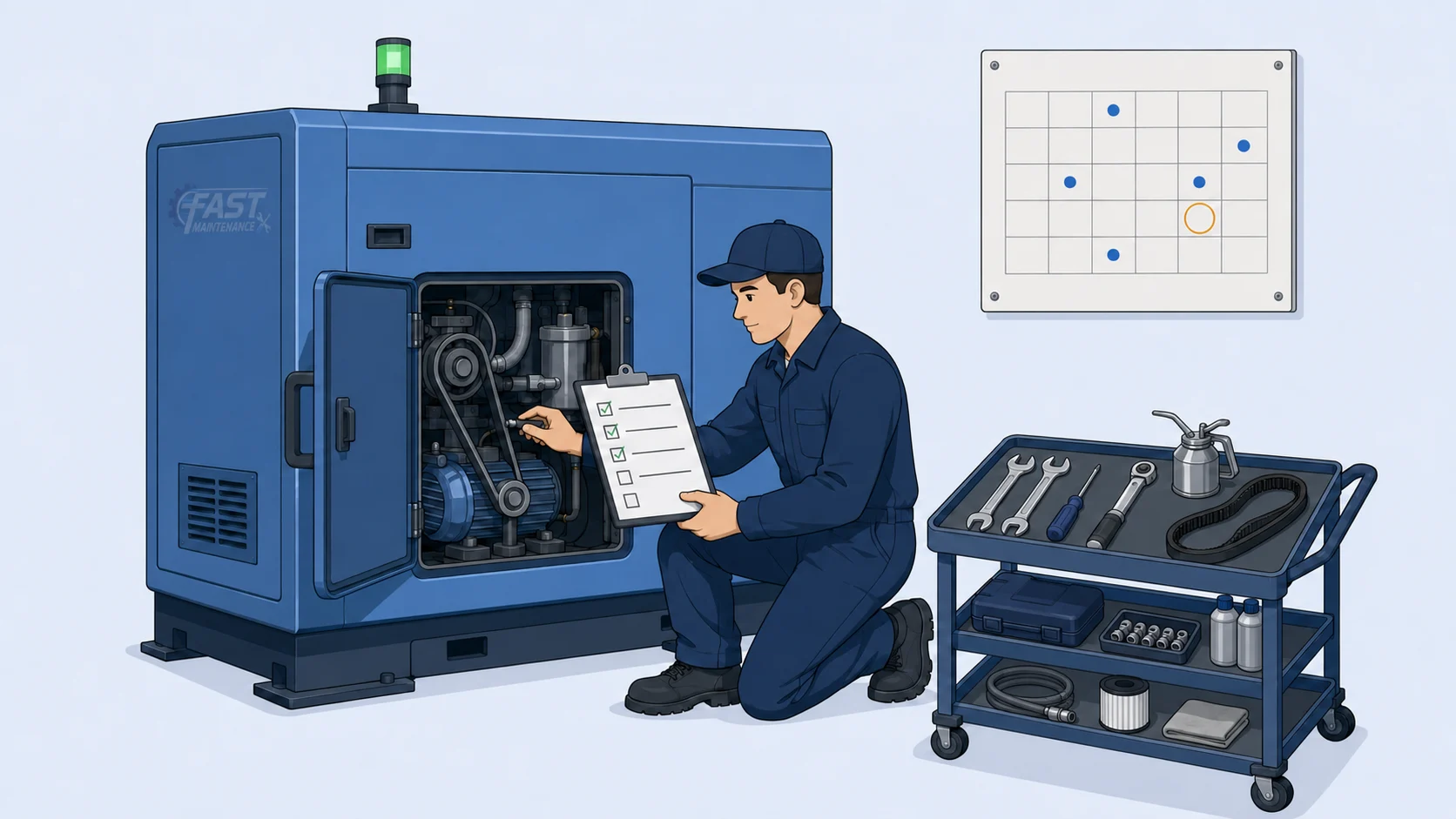
The system reminds your team when each machine is due, with checklists so no step is skipped.
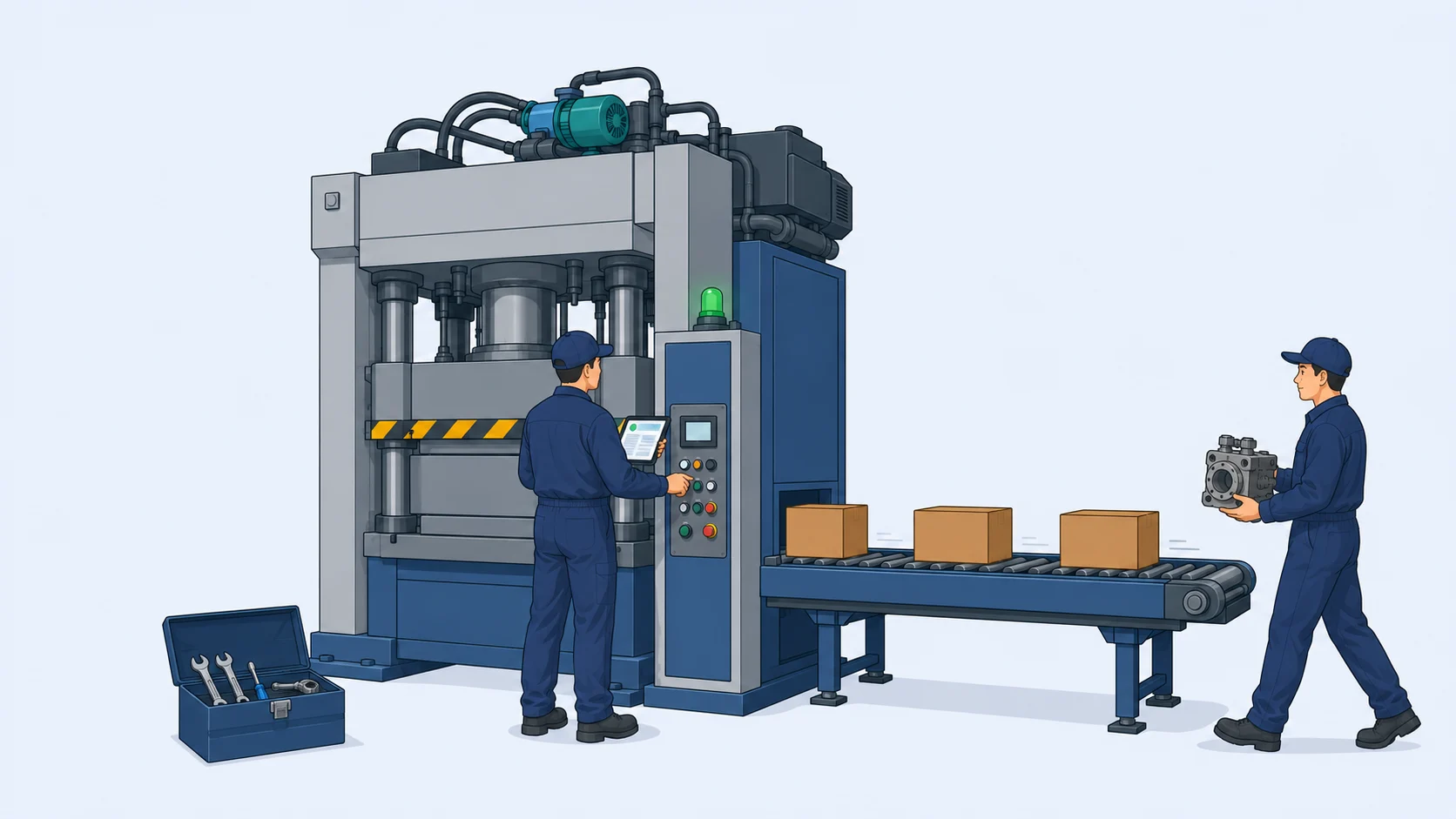
Log a breakdown, assign it, and track the repair until the machine is back up — with the downtime recorded.


Regular maintenance catches small problems before they stop a machine, so production keeps running.

When something does break, the right person and the right spare are on it fast, so machines are back up sooner.
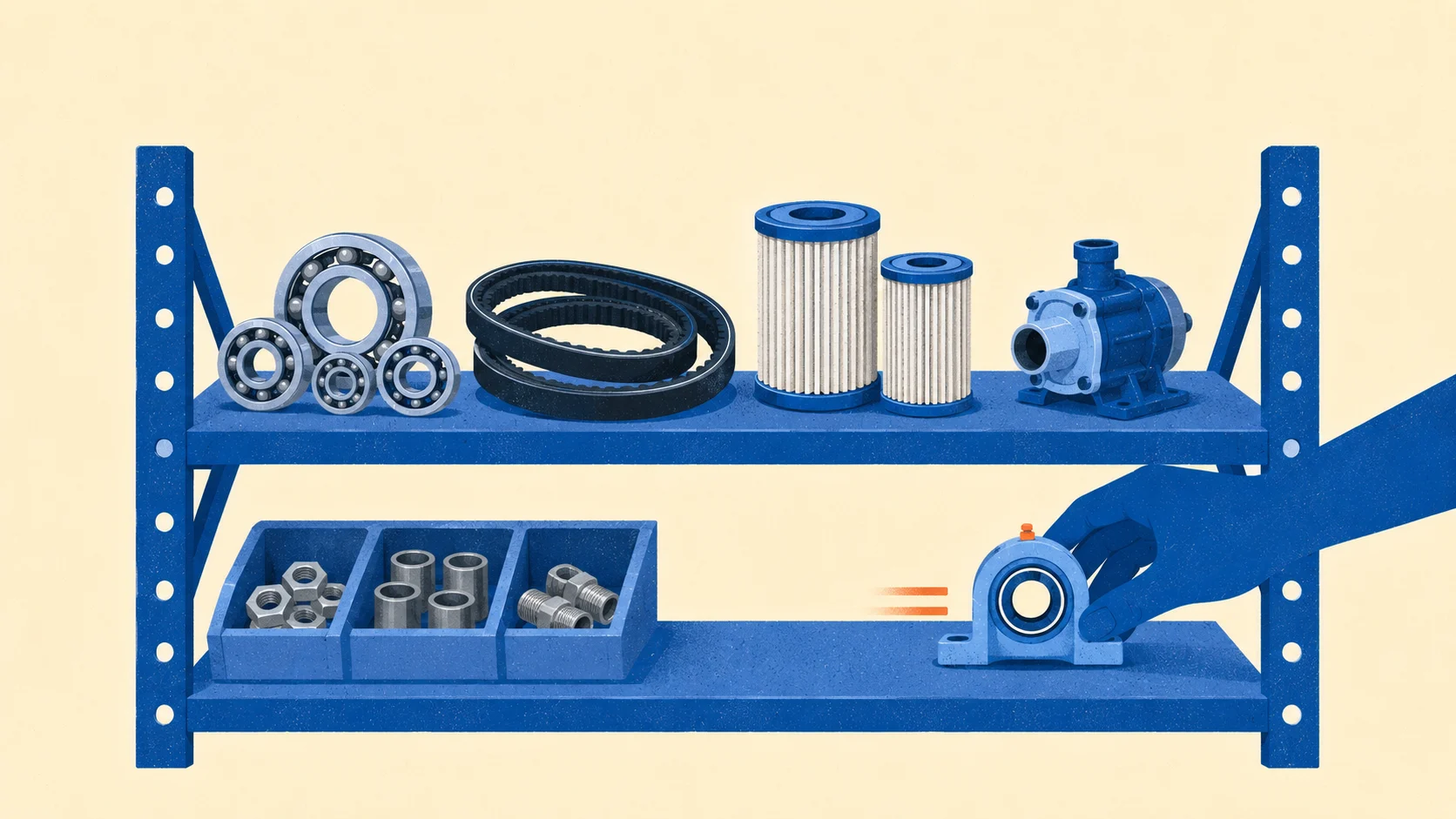
Know exactly what is in your store and get a reminder to reorder before a critical part runs out.
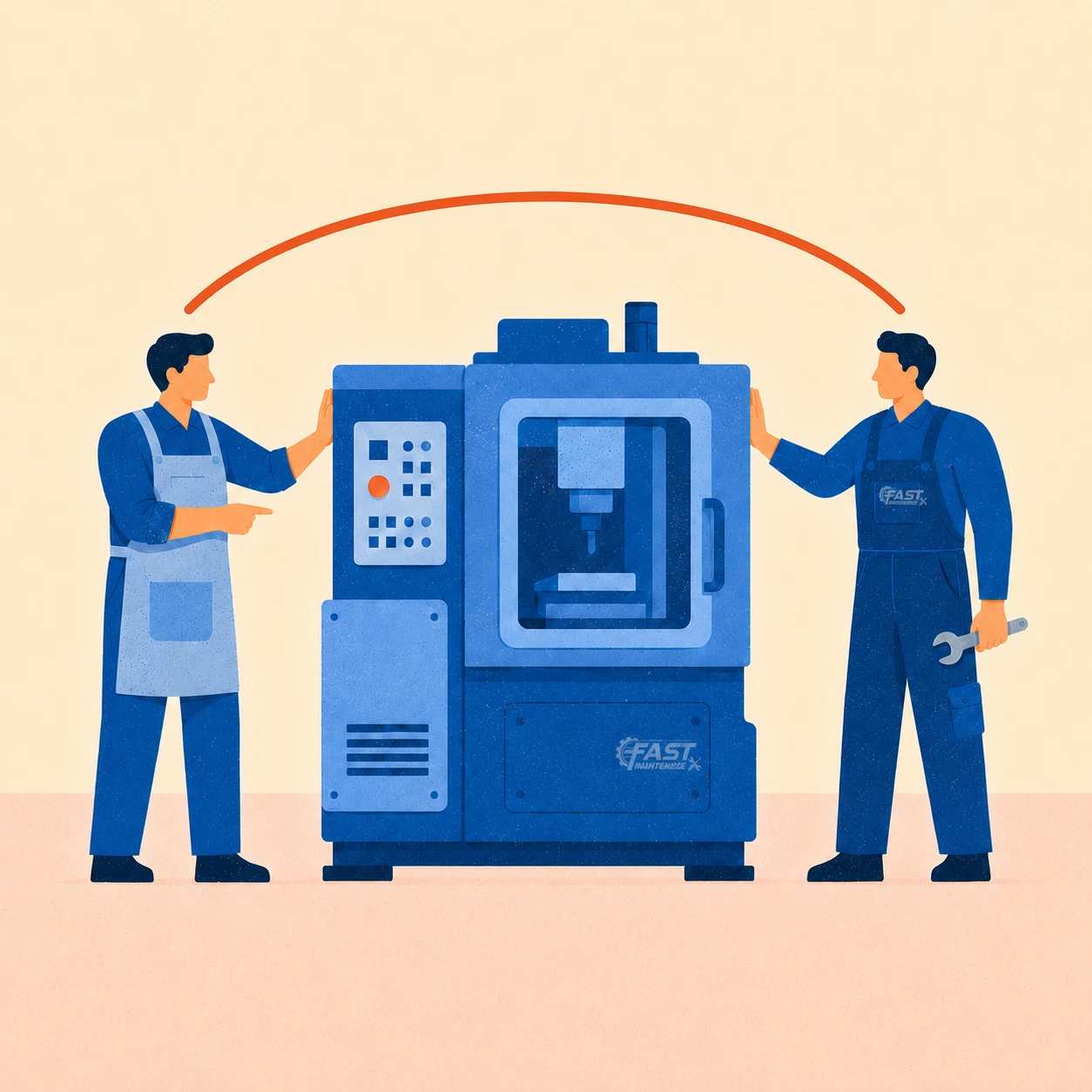
Operators and technicians working from one standardised care routine.
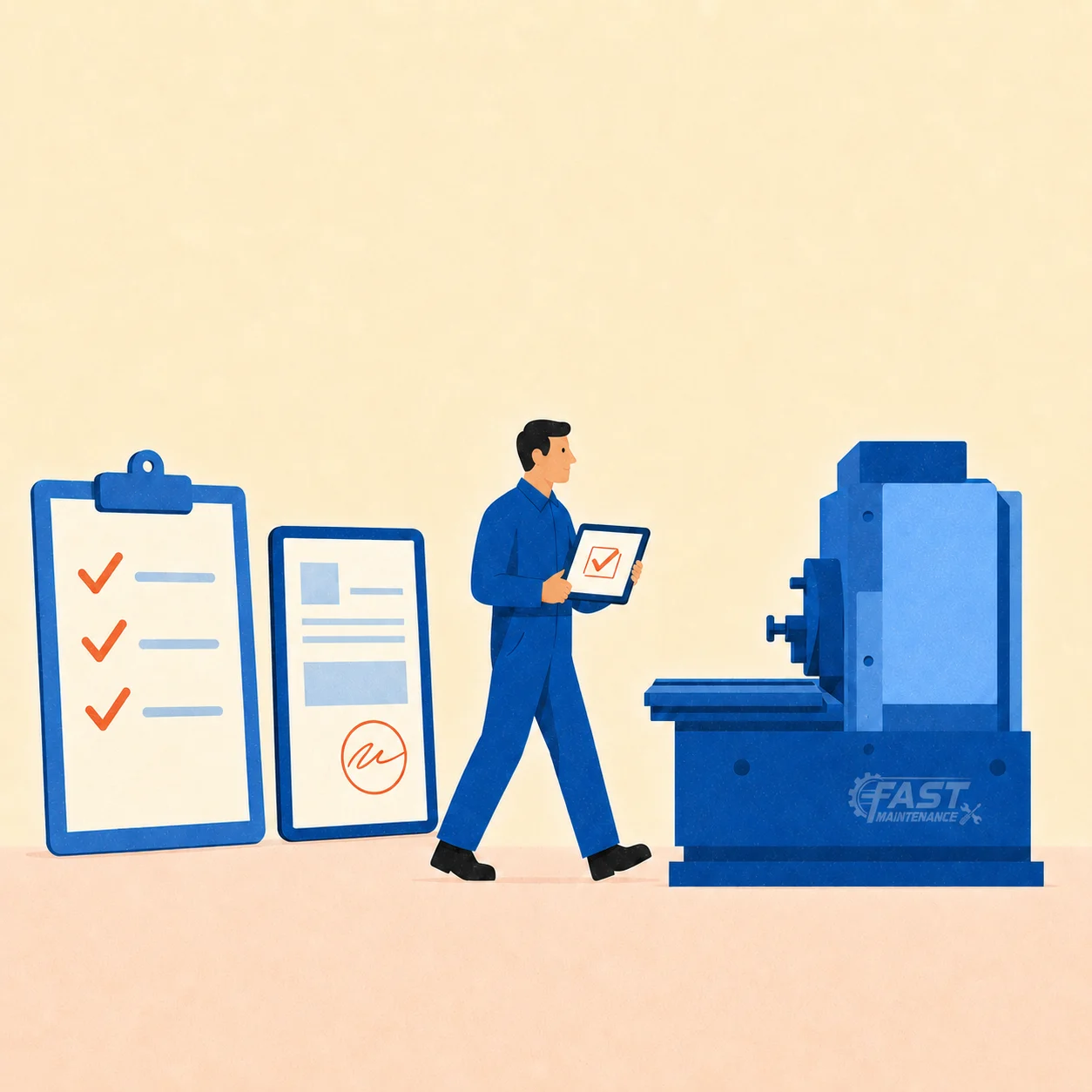
Mandatory work permits and checklists enforced before every job.
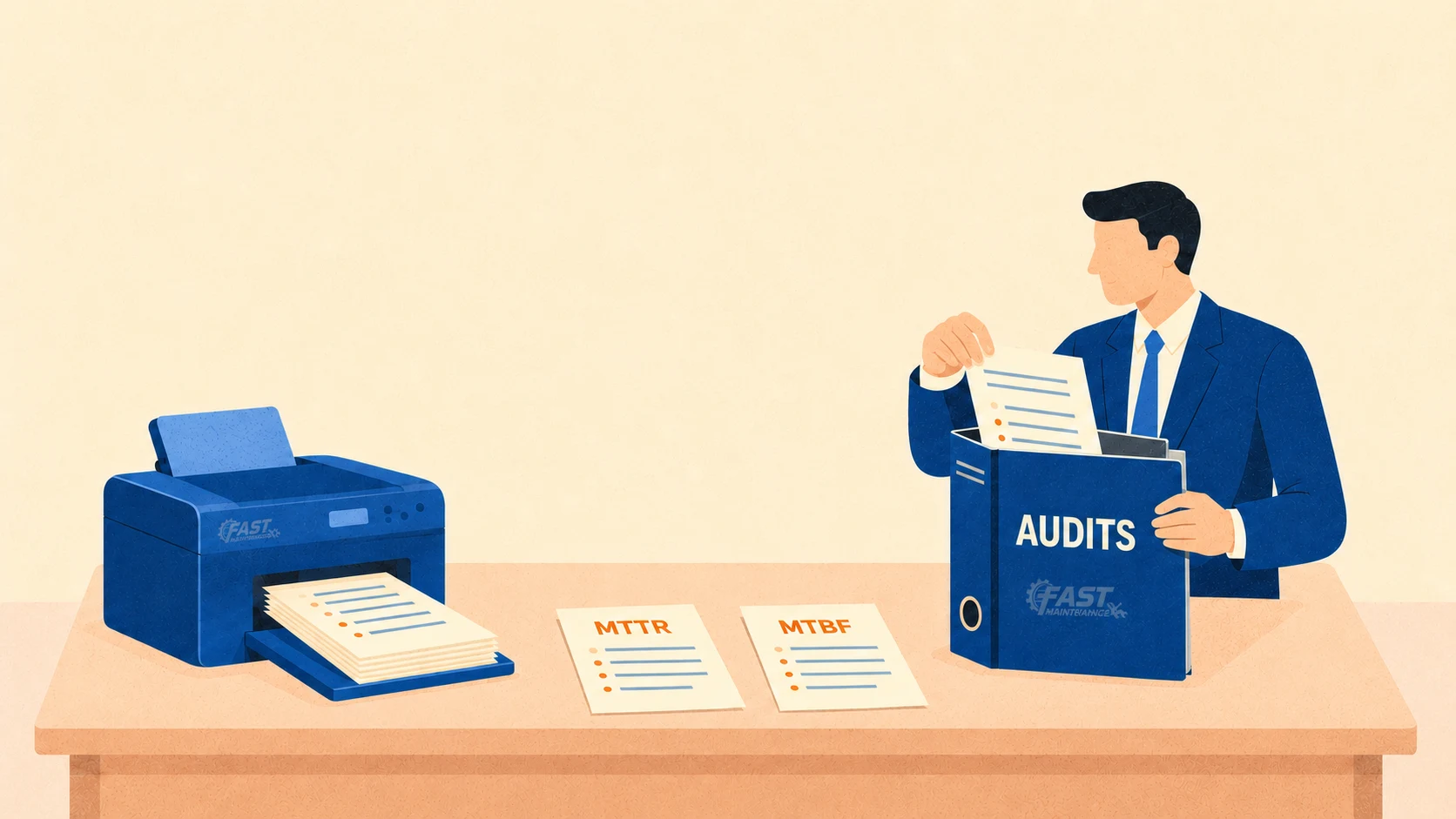
Every service on record, with MTTR and MTBF ready for any auditor.

Fewer unplanned stops, better performance, fewer quality losses.
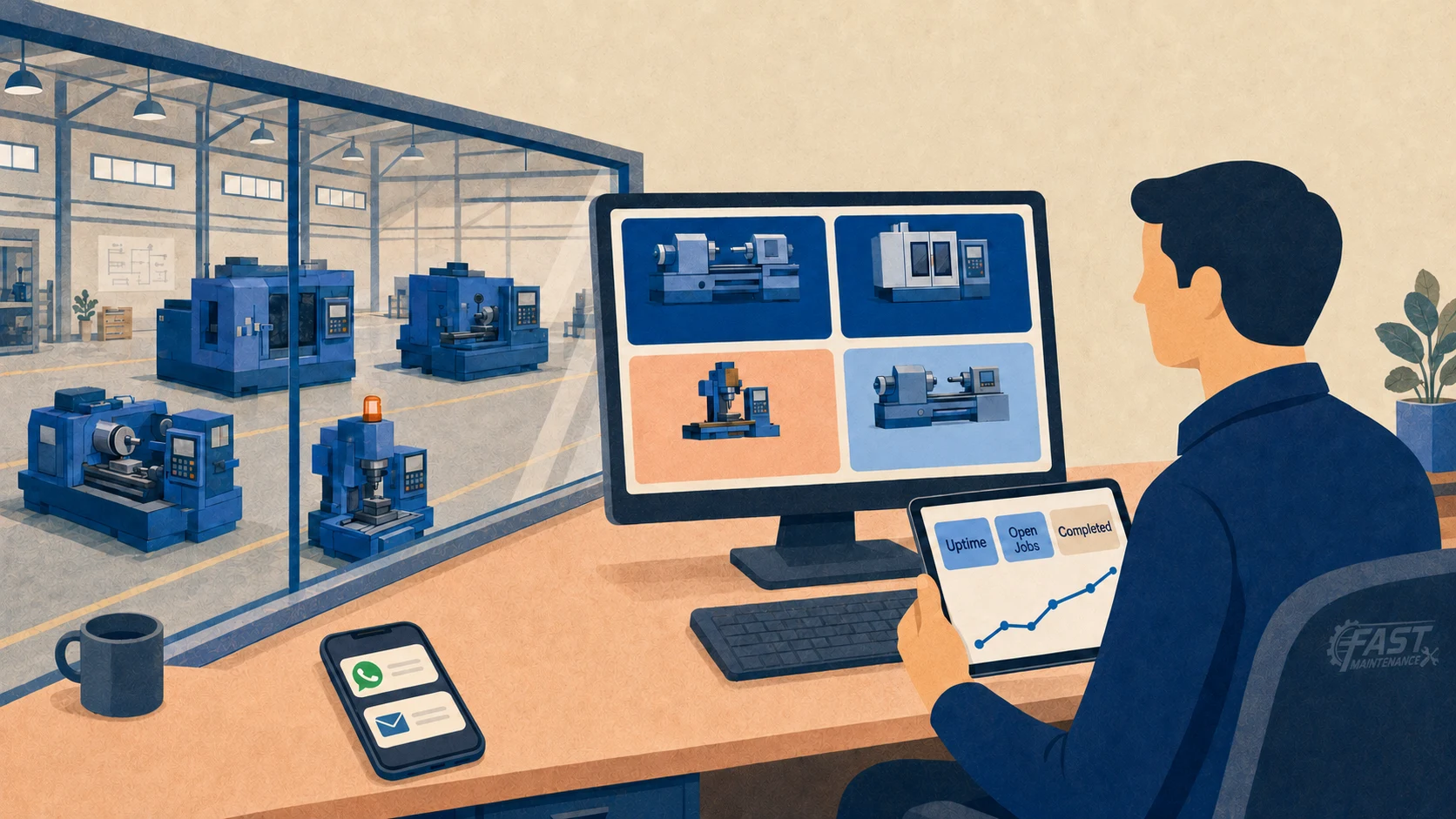
Live asset health, work orders and spare stock, with no waiting for shift reports.
Fast Maintenance runs preventive and breakdown maintenance on the same asset register and ticket engine — so every machine has one history, and every hour of downtime is captured.
Set service intervals per machine, by calendar date or by running hours.
The alert is raised before the due date, not after the failure.
A work order is created and assigned automatically, carrying its checklist.
The job cannot be closed until every step and every safety permit is signed off.
Spares are issued against the work order and deducted from store stock.
On close, the next due date is set from the interval — the cycle never lapses.
Anyone on the floor reports a stoppage from mobile by scanning the machine’s QR tag.
The clock starts the moment it is reported, not when someone remembers to log it.
The ticket routes to a technician with the machine’s full history already attached.
Cause, action taken and observation are all recorded against that asset.
Every spare consumed is booked to the machine, building its true cost of ownership.
The clock stops. MTTR, MTBF, availability and downtime hours compute themselves.
Set service intervals per machine, by calendar date or by running hours.
Register every machine, tool, gauge and utility once — code, specifications, make/model/serial, location and photographs. Print a barcode or QR tag, and technicians scan it to open the asset card on mobile with its full maintenance history.
Each asset links to its own spare parts BoM with re-order levels, and AMC and warranty alerts flag anything nearing expiry — so the right spare is on the shelf before the machine needs it.
Read more
New machines and tools are inwarded and allocated a location; spares are issued against a work order, decrementing stock. Sub-assemblies sent for external repair go out on a dispatch challan, stay visible as pending with the vendor, and are reconciled on receipt — every movement serial-scanned onto one stock ledger.
Each spare records its cost per transaction, not a single master rate — so the same part bought at different prices, or repaired instead of replaced, builds a true machine-wise spend history. Re-order levels trigger a low-stock alert and a maintenance purchase requisition before a shortage stops a machine.

An operator scans the machine's QR tag with a phone camera — no dedicated scanner — and the downtime clock starts. The ticket routes to a technician with the machine's full history attached: diagnose, issue spares, repair, close, with root cause recorded for repeat failures. Downtime splits into waiting for approval, waiting for a spare, waiting for a vendor and actual repair time — so MTTR reflects your team, not the queue in front of it.
Preventive schedules run by calendar date or running hours, auto-creating work orders that carry the PM checklist and safety work permit. The technician marks each check OK or not-OK with photos — and a not-OK check spawns a corrective job on the spot.
Read more
A live status board shows every asset running, idle or down right now, and the maintenance calendar lays out PM and calibration due dates across the month. MTTR, MTBF, downtime hours and breakdown frequency are charted per machine, with per-asset history ready for a TPM review or an ISO 55000 audit.
Machine-wise cost builds from every spare issued, every external repair and every hour of downtime — so you can see which machines are getting more expensive to keep, which spares fail again and again, and whether the answer is repair, overhaul or replace. Age alone won't tell you that.

Fast Maintenance ships with the dashboards and MIS a maintenance team actually runs on — live machine status, breakdown ageing, PM-due, downtime, MTTR/MTBF and spare consumption — plus Dhruv AI, our own AI layer for the questions a fixed report can't answer.
| Machine | MTTR (hrs) | MTBF (hrs) |
|---|---|---|
| CNC-04 | 4.1 | 260 |
| VMC-01 | 3.4 | 380 |
| Drilling-05 | 2.6 | 470 |
| Band Saw-2 | 2.1 | 540 |
Every asset running, idle or down right now, with the current breakdown on each — the plant's maintenance control tower, so the manager sees what's stopped without walking the floor.
Open breakdown tickets by age, priority and technician, with breakdown-maintenance hours and downtime — the operational board the maintenance planner works every shift.
What preventive work and gauge-calibration recalls are due now, this week or overdue — the planning list that keeps the PM programme on schedule and the audit clean.
Mean-time-to-repair and mean-time-between-failures charted over time per machine, with availability — the reliability KPIs that tell you whether maintenance is actually improving.
Downtime hours by asset, line, cause and period, with breakdown frequency — so you can see which machines and which failure causes are really costing you production time.
Spare usage against work orders, stock balances, value and re-order status — the spare-part MIS that keeps the store stocked without tying up cash in parts you don't need.
Every asset's complete record — all PM and breakdown jobs, spares, cost and downtime — in one asset-history report, ready for a TPM review or an ISO 55000 / IATF audit.
Dhruv AI, our own AI engine, gives maintenance leaders a live dashboard over the asset data, with AI insight summaries and clustering of breakdown remarks into recurring failure themes.
"Which machine had the most downtime last month?" Dhruv AI turns the question into a safe, read-only query and answers with the data and a summary.
Fast Maintenance is one of 12 integrated Fast Technology products built on a single platform. It shares the machine master with Fast Production, the gauge-calibration subsystem with Fast Quality, and the spare-stock ledger with Fast Inventory — so a breakdown, a spare issue and a calibration recall all live in one database, with zero re-entry.
Shares the machine master. A machine's availability from maintenance is unavailable capacity for production — planning sees the down machine on the same resource.
Shares gauge calibration. The QMS gauge register and calibration recalls surface on the maintenance due list, so measuring equipment is maintained like any asset.
Holds the spares. Spare stock, issue-against-work-order consumption and re-order run on the same stock ledger your stores team already uses.
Procures & accounts. Spares and external maintenance services are raised as a maintenance purchase requisition, and maintenance spend posts to accounts.
Shares the ticket engine. Breakdown and service jobs ride the same ticket lifecycle as complaint and service tickets — assign, diagnose, close, with history.
The full superset. Maintenance is one module of it — assets, spares, PM and breakdown alongside sales, purchase, production, quality and accounts on one database.
We map your maintenance process first — your asset register, PM schedules, how breakdowns are raised, how spares are stored, where downtime hides, gap analysis. Then we configure Fast Maintenance to fit the way your plant already runs. Not the other way around.
Post go-live is not where we disappear. Dedicated support team, multiple channels, monthly review meetings, and patches issued on feedback. We treat support as part of the product.
A CNC machine, a building's HVAC, a forklift and a calibrated gauge all need maintaining — on schedules, with spares, and with downtime that costs money. Fast Maintenance registers and maintains every asset class on one system.
Machine shops, fabrication and automotive-component plants keeping CNC machines, presses and tooling running — planned PM, fast breakdown response, and MTTR/MTBF for the TPM board.
Plant-engineering and facilities teams maintaining compressors, DG sets, HVAC, boilers and building services — scheduled PM, breakdown response and a single register of every utility asset.
Warehouses and logistics operations maintaining forklifts, conveyors, dock equipment and site machinery — usage-based PM by running hours, breakdown response and spare-part control.
Quality and calibration labs managing a gauge register with calibration frequencies, due recalls and certificates — measuring equipment maintained on the same due list as every other asset.
Process plants and multi-site operations that need one asset register, PM schedules and downtime history across every location — asset-intensive maintenance standardised and rolled up.
Live machine status, PM compliance and MTTR/MTBF dashboards instead of a spreadsheet — what is down now, whether PM is being done, and whether reliability is actually improving.
Maintenance runs on the shop floor, so Fast Maintenance meets it there: WhatsApp, email and SMS push PM-due, breakdown and re-order alerts the moment they fire; barcode and QR tags turn a scan into an asset card; spares and procurement run on the shared inventory ledger; and Dhruv AI reads the whole asset history for you. One system, connected where it counts.
See all integrationsSee how Fast Maintenance handles your exact assets, PM schedules and breakdowns. Live demo, your machines, your spares, your questions. No generic slideshow.
